


Divorce mediation is a structured process in which a neutral third party — the divorce mediator — helps separating spouses reach their own agreements on the issues that need to be resolved, such as parenting arrangements, child support, spousal support, division of property and debts, and anything else that is part of their separation. The mediator does not make decisions for the parties. Their role is to facilitate productive conversation, help each person understand their options, and guide both parties toward agreements they can both accept.
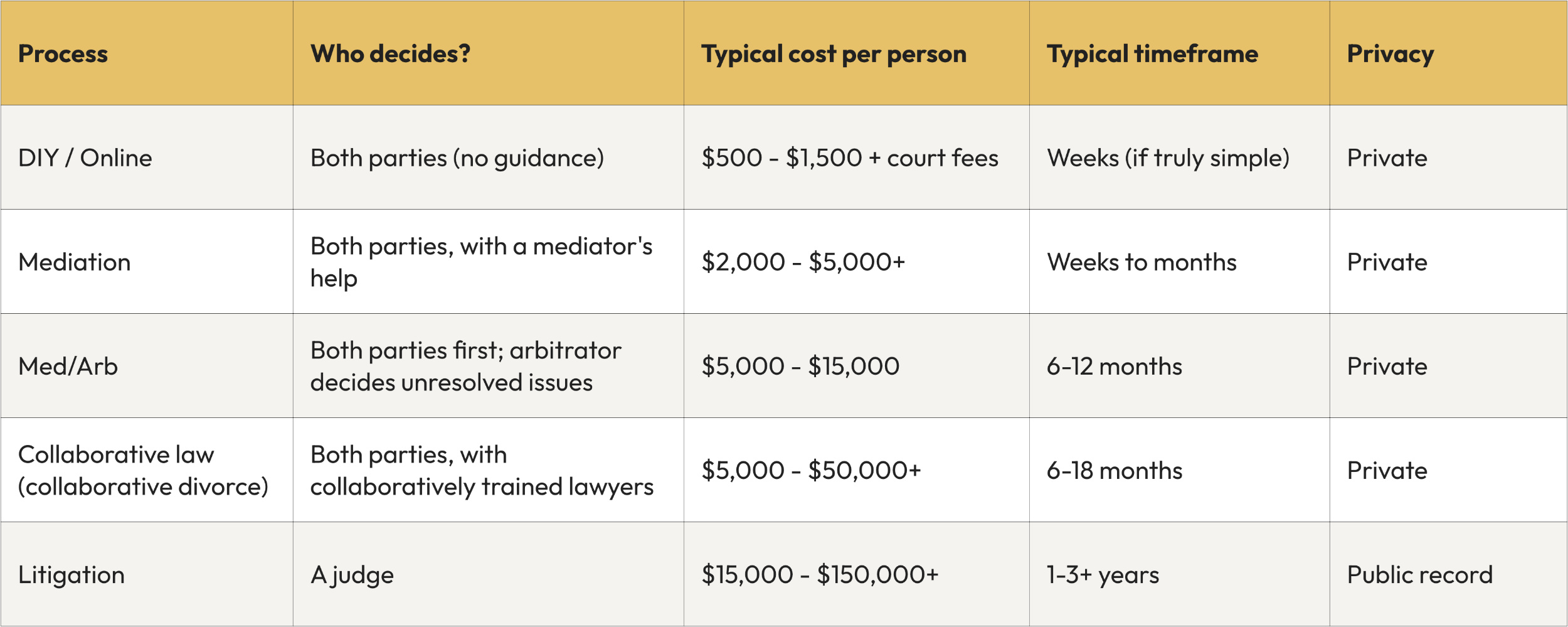
Mediation is one of several alternative dispute resolution (ADR) processes recognized under Canadian law, alongside litigation, collaborative law, arbitration, and Med/Arb. It is the most widely used alternative to court-based divorce process, and in most provinces, family justice services now actively encourage or even require parties to attempt some form of ADR before proceeding to litigation.
A successful mediation results in a memorandum of understanding or draft separation agreement that both parties take to their own lawyers for independent legal advice before signing. The signed separation agreement is a legally binding contract.
Source: Justice Canada – Fact Sheet - Family dispute resolution: resolving family law issues out of court
Here are some questions you may be asking yourself:
- "What does a divorce mediator actually do?"
- "How is mediation different from going to court?"
- "Is mediation cheaper than hiring a lawyer?"
- "What if my spouse won't cooperate in mediation?"
- "Can mediation work if we have children or significant assets?"
- "Is a mediated agreement legally binding in Canada?"
- "When is mediation not appropriate — for example, if there has been abuse?"
- "How long does mediation take?"
All these questions and more will be answered on this page!